
Rugby is a sport impacted by altitude like few others. With the World Champions, South Africa, and their domestic teams playing some of their matches on the Highveld, opposition are hit with the double whammy of a tough encounter and high altitude. Here, Performance Specialist Matt Vallance takes a look at how altitude impacts rugby performance, and what we can do about it.
Context
A key victory in their path to the final of the European champions cup came in December 2024 as Northampton Saints became the first team to defeat the Vodacom Bulls in the champions cup at Loftus Versfield stadium in 3 years.
An impressive feat for the uninitiated at that altitude. The stadium sits at 1350m above sea level in Pretoria and has been the fortress for both the Vodacom Bulls and occasionally the Springboks. Both sides boast an impressive win rate at Loftus, with the Springboks having won roughly 75% of their test matches that they have played at the venue.
It has understandably become a fortress given that it is such an uncomfortable place for the unacclimatised and unprepared to visit and play. In an interview with the Good Bad and Rugby podcast England and Northampton Saints full-back described the Bulls as a brutal place to go away and play. Tigers and British and Irish Lions legend described the feeling as “like breathing through a straw”.
This rough sentiment towards playing at altitude is also reflected in the literature as well as the stats from matches played at altitude. A study 2015 study reviewed the effects of travel and playing at altitude during the 2012 super rugby season. The authors showed that sea level-based teams (like Northampton Saints) playing at altitude (like Loftus Versfield) missed more tackles and scored fewer points in the second half of the match in comparison with matches played at sea level (George et al., 2015). Perhaps most crucially for all the statisticians out there, teams made substantially fewer metres at the gain line. The decrease in output highlights the drastic impact altitude can have on rugby specific key performance indicators (Weston et al., 2001)
The decrease in these key effort areas and overall performance for visiting teams at altitude explains why the Bulls and the Springboks have been so dominant when playing at Loftus Versfield. They have what I like to call an acclimatisation advantage.
Why is there a decrease in performance at altitude?
Anything over ~1200m is classed as altitude because this will have a physiological impact on the body. The higher you go, the thinner the air becomes; oxygen molecules are more spaced out at high altitude. Therefore, with each breath you take in less oxygen. This leads to a series of physiological impairments.
Energy system impairment
The thinner air at high altitude impacts the systems that our body uses to produce energy. There are three main ways that the body produces energy: The ATP- PCr system, the glycolytic system and the aerobic system.
The ATP- PCr system breaks down phosphocreatine (PCr) to provide ATP (energy) to the muscles for short high- intensity activity that lasts up to 10 seconds. The system is replenished via aerobic pathways in the mitochondria. It is the dominant energy system involved in those short sharp efforts that are so common in rugby, for example: dominant ball carries, tackling opponents and clearing out rucks. The Impaired O2 supply in the atmosphere, has been shown to hinder PCr resynthesis (McMahon & Jenkins, 2002), the slower resynthesis means that this energy system is fatigued earlier therefore this less energy is produced by the ATP PCr system at altitude, which leads to weaker, carries and tackles.
The aerobic system relies on oxygen to break down carbohydrates and fat to produce energy. ATP generated by the aerobic system is also used to resynthesise the ATP- PCr system. During a rugby match players rely massively on the aerobic system to produce energy for example: jogging around the pitch in between carries and to recover for the following carry. Due to the reduction of oxygen at altitude, there is a decrease in oxygen uptake to the working muscles and an increased reliance on anaerobic energy systems to maintain output. An increased reliance on anaerobic energy systems leads to an earlier onset of fatigue. In addition, the ATP- PCr system does not replenish as much as it does at sea level. This has a negative domino effect on the follow- up action, which would lead to soft- shoulder tackle or a weaker carry into contact.
The glycolytic system provides ATP and energy by breaking down glucose without the presence of oxygen. It provides energy for actions lasting between 10 seconds and 2 minutes. As a match progresses the ATP- PCr system becomes depleted and replenishment cannot be matched by the aerobic system, which is more significant at altitude, the glycolytic system becomes paramount for providing energy to carry out the high-octane efforts. Using the glycolytic system to produce energy leads to the production of lactate which binds to hydrogen ions, this one of the key factors associated with the buildup of fatigue. Therefore Increased reliance on the glycolytic energy system leads to increased buildup of fatigue and a reduction in player output this is evident as ball carrying and tackling becomes less forceful.
Neural impairments
Muscle contraction at altitude is also inhibited. All muscle contraction begins in the brain which sends an electrical message called an action potential along the nerves to the muscle that you want to contract. A key part of this pathway is the sodium (Na+) / potassium (K+) leak to pump ratio which prepares the cell membrane to deliver an action potential. At altitude the leak pump ratio in the muscles is inhibited (Perrey & Rupp., 2009). As a result, muscle contraction is weaker especially amongst fast twitch fibres, this is associated with the buildup of fatigue. For a player this means that they are not maximising each contraction and producing the large, explosive forces that are involved in a dominant carry/ tackle or jumping in the lineout. It also highlights inefficiency- there is a large central drive which eventually comes to nothing, this leads to the buildup of central fatigue which will inhibit further muscle contraction.
Central impairments
Deoxygenation of the brain whilst at altitude could also be a factor that leads to a decline in repeated sprint ability and hence a lower output in matches for rugby players. Smith and Billaut., (2010) found that during 10 x 10s sprints larger deoxygenation of the brain occurred in hypoxic conditions in comparison with normoxic conditions. Greater deoxygenation of the brain leads to impaired motor unit recruitment and hence a weaker muscle contraction. This is most likely a survival mechanism. The brain, renowned for being oxygen hungry, reduces motor unit recruitment within the muscles which demand oxygen, to ensure that it receives as much oxygen as possible.
Impaired resynthesis of phosphocreatine stores, inefficient Na+/ K+ leak to pump ratio and deoxygenation of the brain whilst at altitude combine to generate fatigue. The build-up of fatigue impairs repeated sprint ability. An impairment in repeated sprint ability can be attributed to a decrease in output in those key effort areas of the sport of rugby e.g., tackling, carrying the ball. Failure to win these key battles almost always leads to a loss.
How can we use altitude to our advantage in rugby?
Up to this point in the blog I have portrayed altitude to be a monster that has powered the Springbok success and one which will continue to thwart anyone who tries to take the World champions crown when playing on their home patch.
But it is possible that the very thing that has contributed massively to the Springbok’s success at stadiums such as Loftus Versfield could be the answer to take their crown. There are two schools of thought at play when approaching a match at altitude.
- Fully acclimatise the team to the conditions that they will face in a high attitude environment.
- Train in altitude to improve performance at altitude.

Wales deployed the first method in 2015, 2019 and 2023 prior to the world cups that year. They stayed in Fisch, a small alpine village which is located 2300m, and then did their training sessions at 1000m which were described as hellish by inside centre Hadleigh- Parkes … It certainly paid dividends for their 2015 and 2019 campaigns.
However, this method possesses both logistical and financial challenges, it’s challenging to take away a squad of 30 players to the Alps for a week before a Champions cup pool clash, which is not the most important match in the world. It is also not cheap to do such a thing, and with most Premiership rugby clubs operating at a loss, it is unlikely that they would fund a weeklong altitude holiday.
The latter option is a much more achievable and realistic alternative; it saves both time and money, they can be easily incorporated into training sessions and fit nicely into the competitive schedule. Team managers don’t have to coordinate travel time, flights and hotels. The logistical savings are also mirrored on the pitch. Training at altitude will increase players fitness and performance at sea level. Also, whilst it has not been proven to improve performance at altitude, following regular bouts of exposure it can be assumed that performance at altitude will improve as well.
Repeated sprint ability
One of the most important KPI’s in rugby performance is repeated sprint ability (RSA). Repeated sprint ability is the production of maximal sprint efforts, interspersed with incomplete recovery periods which are usually low to moderate intensity (Girard et al., 2017). Repeated sprint ability has the closest crossover to rugby performance, for example making multiple carriers in one game phase on the flip side, consistent tackle efforts in defence.
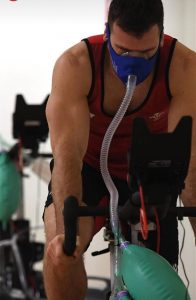 Repeated sprint training generally consists of several short sprint (<10 seconds) followed by a short recovery period (20 seconds). For example, 3 sets of 10 six second efforts. Sprints are usually performed on a bike or treadmill. During the sprint effort, rapid muscle deoxygenation and depletion of the phosphocreatine stores occurs, also over the course of the efforts lactate builds up in the blood which is associated with fatigue and exhaustion. Repeated sprint training has been shown to improve countermovement jump, sprint times across 10m, 20m and 30m as well as overall repeated sprint ability, which is directly beneficial for team sports athletes (Taylor et al., 2015).
Repeated sprints at altitude
Repeated sprint training is beneficial regardless of where it is conducted. Further improvements can be discovered by performing repeated sprints in a hypoxic environment (Brocherie et al., 2017).
Interest in repeated sprints performed in hypoxic environments soared after a 2013 study by Faiss et al. (2013) During their research they had 50 moderately trained cyclists complete 2 repeated sprint training sessions every week for 4 weeks. 20 cyclists performed the training sessions in a normoxic environment, 20 cyclists performed the sprints in a hypoxic environment at an altitude of 3000m and 10 were in a control group which had no specific sessions. During the prescribed training sessions cyclists completed 3 sets of 5 x 10 second all out sprints with a 5-minute recovery period at 120W between reps and a 10-minute recovery period at 120W between sets. As expected at the end of the 4-week period the average power of the sprints increased to a similar extent regardless of training environment. The most fascinating discovery was not the increase in the power of each sprint… But the number of sprints performed before exhaustion. The group that had trained in the hypoxic environment performed 4 more sprints (13) before they were exhausted than the group who trained in a normoxic environment (9). Switching focus from the papers to the pitch, this means that rugby players who train repeated ability in hypoxia will be able to produce more power during those all-out efforts and crucially perform more of those efforts: more tackles and more dominant carries during a match without a significant reduction in power output, which will heavily contribute to a win.
In 2019 there was a shift to focus on how repeated sprint training could be used amongst professional rugby players. During their research Beard et al., (2019) recruited 19 international rugby players to perform 2 repeated sprint sessions each week for 2 weeks in total. 10 players completed the sessions in a hypoxic environment at 3000m, and 9 players completed their sprints in a normoxic environment. The training sessions for both groups consisted of 3 x 8x 10 seconds, 3 sets of 8 ten second all out sprints, with 20 seconds of recovery between each sprint and 2 minutes of rest between each set. The key finding of this study was that just 4 sessions performed in hypoxia elicited a greater improvement in power output than the same sprints performed in normoxia. The shorter rests involved during this protocol mirror a rugby match more closely than the Faiss study. But it provides further evidence that, on the pitch, hypoxic repeated sprint training will manifest itself in the format of higher force in carries and tackles or improved jump height for a lock during a lineout when they are already fatigued during a game. A major finding from the study is that it demonstrates how and easy, small training block can be incorporated and yield great results which could be the key in winning a game between two evenly matched teams.
Mechanisms of adaptation, what happens during a repeated hypoxic sprint?
During the 10 second all out effort on a static bike or treadmill, deoxygenation occurs within the muscle. By performing the sprint in a hypoxic environment, which limits the amount of oxygen going into the system, this deoxygenation occurs to a greater extent. Deoxygenation of the muscle triggers the gene transcription factor HIF- 1 alpha, which is the chief of hypoxia related gene adaptation.
The stimulation of HIF- 1 alpha has a cascading effect: VEGF (Vascular endothelial growth factor), EPO and PGC-1 alpha are all activated. This leads to the formation of new capillaries (angiogenesis), the production of new red blood cells (erythropoiesis) and increased myoglobin content (Pramkratok, Songsupap, Yimlamai., 2022). The maximal sprint nature of repeated sprints means that fast twitch fibres are recruited to perform the movements (Faiss et al.,2013), and over time these fast twitch fibres start to behave more like slow twitch fibres because they can extract oxygen more effectively and consequently become more fatigue resistant this will allow a player to continue working for the 80 minute duration of the match.
The long-term effect of these adaptation is enhanced oxygen delivery to the muscles and brain and improved power output. This leads to a higher resistance to fatigue and improved perception of fatigue. An example of this on the pitch would be an openside flanker is able to make more tackles, is more productive at the breakdown to slow down the speed of play or force a turnover whilst defending. On the other side of the ball when on the attack their ball carrying will be more destructive and they will be able to produce more of those highly destructive carries. The crucial benefit is that there will not be a significant decrease in the quality of those efforts. This compounds into points during a match, and the end result of those points will be a strong 5-point win.
In summary, for a rugby player the combination of the adaptations leads to:
- Increased oxygen delivery to the muscles and brain.
- Improved resistance to fatigue.
- More output across the 80 minutes.
Practical considerations for repeated sprints
Whilst exhausting in the moment due to their all- out nature they are very effective given that recovery from a session is quick, repeated sprints are rarely performed by themselves in a stand- alone session. One of their main positives is that they are very time efficient- a small block of time allocated, has the potential for massive returns. Repeated sprints are often used as top- ups due to their time efficient nature. Research suggests players should aim to perform sessions at least 2-3 times per week. This can be done after a strength session or field-based sessions. Performance decrements are likely to be observed after a strength session in comparison to a field-based sessions, because strength sessions will deplete ATP- Pcr stores, this will have a negative impact on the intensity of the sprints. Another major advantage of repeated sprints in hypoxia (RSH) is that it can be performed both in season and during pre-season. If performed in-season it would be wise to do the sessions in an off-feet manner, most likely on a wattbike, similarly during pre-season, where running volume is high it provides a nice medium for off-feet conditioning, which will prevent the onset of hamstring injuries that could disrupt a season further down the line.
The repeated nature of the sprints means that the first sprint will use the ATP-PCr system, in the following reps players will become more reliant on the glycolytic system and the final sprints will be reliant on the aerobic system. When programming sprints it’s important to think about which energy system we want to target. Fewer reps within a set will focus on the ATP/ PCr and anaerobic glycolytic system. Alternatively more reps within a set will stress all three systems especially the glycolytic system and aerobic energy system.
The length of each effort is dependent on which energy system you are focused on improving. For rugby players efforts should be 6-8 seconds in duration, because this simulates the length of the average effort within a match. Whilst efforts of this duration target the ATP-Pcr system, this becomes depleted after the first sprint, the following sprints will use the glycolytic system to provide energy, and the final efforts will rely on the aerobic system. Targetting both the ATP/ PCr system glycolytic system will benefit players improve their capacity in those short sharp efforts like a dominant carry. Also, by improving the glycolytic system, which is predominantly used during a match, they will improve their ability to repeat those high intensity efforts.
Recovery also plays an important role in targeting a specific energy system. Shorter recoveries between reps don’t allow resynthesis of Pcr which shifts the focus to the glycolysis. This means that there is an increase in glycolytic gene expression. Which leads to an increase in glycolytic capacity. This is beneficial to a rugby player because it produces energy more quickly than the aerobic system, so between efforts a player can recover faster and has more energy for the following action.
Example session
The repeated nature of the sessions means that efforts need to pile on top of each other. A perfect example would 3 x10 x 6 seconds. 3 sets of 10, six second all out sprints. Players should rest for 30 seconds recovery between repetitions and 3 minutes recovery between sets to allow the player to perform all out efforts in the following set. The literature shows that the shorter rests between reps is what will build fatigue resistance. The large rests between sets are also necessary to ensure that the following set can be performed at maximal effort, if you have long recoveries between repetitions then it just becomes sprint training, which is important for rugby players, but not the focus of these sessions, we want to target repeated sprints!
Given that repeated sprints at altitude derives greater benefit than sea level, it’s important to perform the sprints at the correct altitude to ensure athletes reap the rewards without destroying performance. The literature shows that the optimal range is between 2500m and 3000m (Galvin et al., 2013). Performing exercise at this altitude will lead to a drop in blood oxygen concentration which stimulates the chief regulator HIF- 1 alpha which is responsible for driving the adaptations that we have discussed, without compromising the maximal intensity that is necessary.
On site, our chamber which is set at 2700m (15% oxygen) is the perfect place to perform repeated sprints. It has been proven that higher altitude does not always mean better, similar improvements in anaerobic capacity have been seen from 1500m up to 3200m (Gutknecht et al.,2022). It’s possible that beyond this point symptoms of acute mountain sickness may detetiorate the quality of a session and individuals will not be able to recruit enough fast twtich fibres to generate adaptation. Alternatively for teams/ players based outside London it’s also possible to train at altitude using a rental generator as long as you have access to a wattbike or treadmill, just like the British and Irish lions did prior to their series in South Africa in 2021, who used our rental machines and followed a training camp that we designed, to help them perform and acclimatise for their matches in South Africa.
Final thoughts
Whilst I don’t know if the Saints players used repeated sprints in hypoxic conditions to prepare for their match against the Bulls, and there is little literature that has tested repeated sprint training in hypoxia and its relationship with performance in hypoxia. There are undeniable performance benefits available at sea level, where teams play nearly almost all their games during a season. Whilst it’s not famous for being at altitude, the benefits from training at altitude can certainly be utilised by the Lions ahead of the long- awaited series in Australia this summer.
References
Beard, A., Ashby, J., Chambers, R., Brocherie, F. and Millet, G.P., 2019. Repeated-sprint training in hypoxia in international rugby union players. International journal of sports physiology and performance, 14(6), pp.850-854.
Brocherie, F., Girard, O., Faiss, R. and Millet, G.P., 2017. Effects of repeated-sprint training in hypoxia on sea-level performance: a meta-analysis. Sports Medicine, 47, pp.1651-1660.
Faiss, R., Léger, B., Vesin, J.M., Fournier, P.E., Eggel, Y., Dériaz, O. and Millet, G.P., 2013. Significant molecular and systemic adaptations after repeated sprint training in hypoxia. PloS one, 8(2), p.e56522.
Galvin, H.M., Cooke, K., Sumners, D.P., Mileva, K.N. and Bowtell, J.L., 2013. Repeated sprint training in normobaric hypoxia. British journal of sports medicine, 47(Suppl 1), pp.i74-i79.
Girard, O., Mendez-Villanueva, A. and Bishop, D., 2011. Repeated-sprint ability—part I: factors contributing to fatigue. Sports medicine, 41, pp.673-694.
Gutknecht, A.P., Gonzalez-Figueres, M., Brioche, T., Maurelli, O., Perrey, S. and Favier, F.B., 2022. Maximizing anaerobic performance with repeated-sprint training in hypoxia: In search of an optimal altitude based on pulse oxygen saturation monitoring. Frontiers in Physiology, 13, p.1010086.
Pramkratok, W., Songsupap, T. and Yimlamai, T., 2022. Repeated sprint training under hypoxia improves aerobic performance and repeated sprint ability by enhancing muscle deoxygenation and markers of angiogenesis in rugby sevens. European Journal of Applied Physiology, pp.1-12.
Smith, K.J. and Billaut, F., 2010. Influence of cerebral and muscle oxygenation on repeated-sprint ability. European journal of applied physiology, 109, pp.989-999.
Taylor, J., Macpherson, T., Spears, I. and Weston, M., 2015. The effects of repeated-sprint training on field-based fitness measures: a meta-analysis of controlled and non-controlled trials. Sports Medicine, 45, pp.881-891.